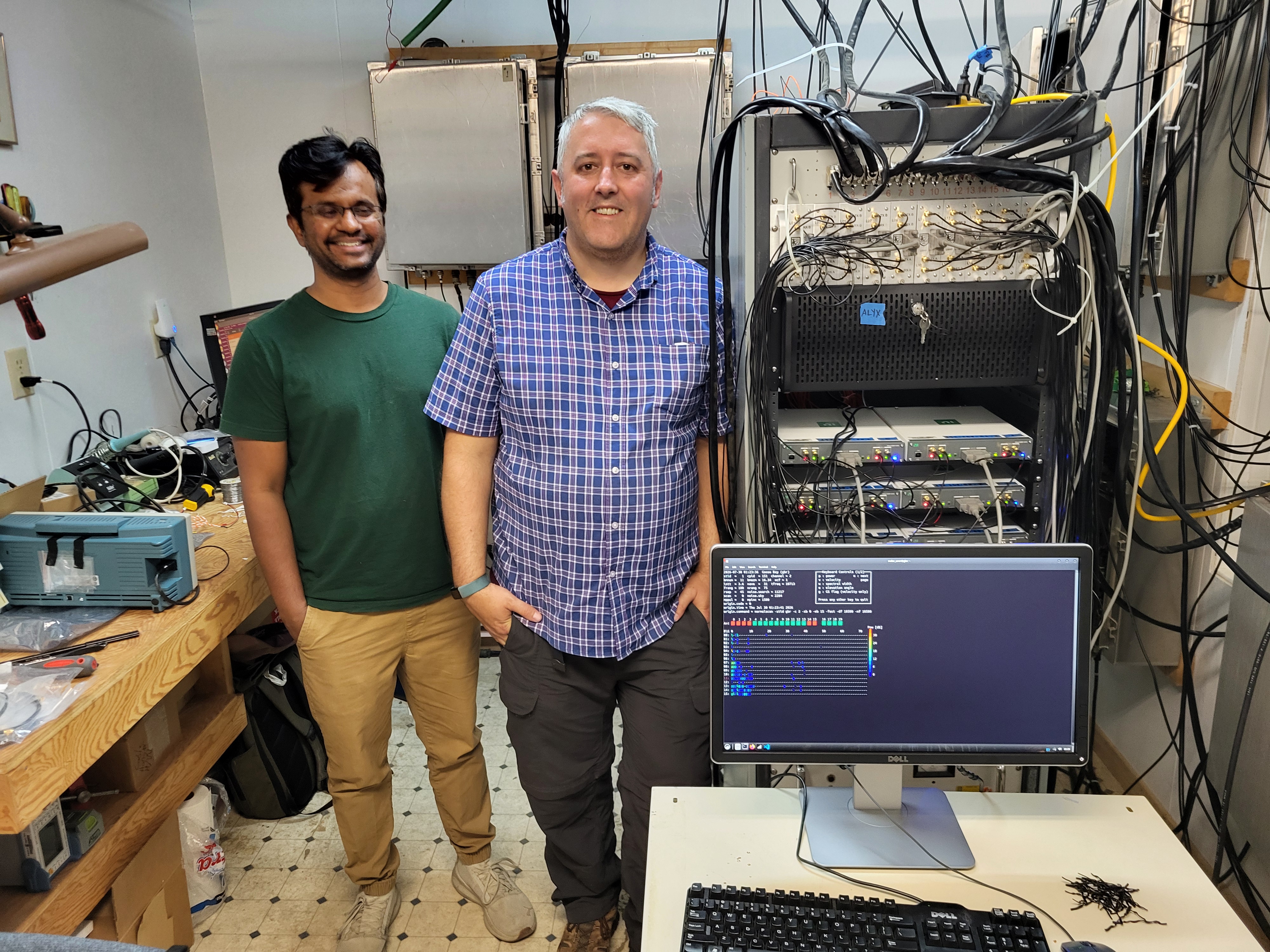
New USRP-based radar control electronics installed at the Goose Bay site
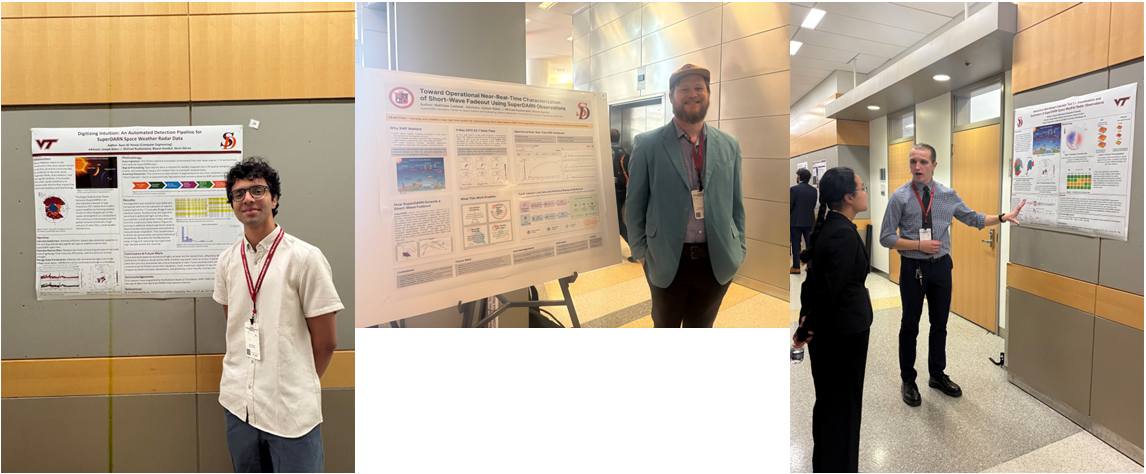
VT SuperDARN students present at REU showcase

SuperDARN Workshop 2026 in Nagoya, Japan, June 7-12

Aerial view of the Fort Hays SuperDARN site operated by Virginia Tech.

Mid-latitude SuperDARN review.

Goose Bay Radar: The grand old dame of HF radars.

SuperDARN radar at the McMurdo station in Antarctica.

View of the Blackstone SuperDARN radar operated by Virginia Tech.

Electronics at the Blackstone radar site.

An example of a ray tracing simulation.
Latest News
SuperDARN
View AllNew USRP-based radar control electronics installed at the Goose Bay site
A team from the Virginia Tech SuperDARN group carried out a wholesale replacement of the rad...
SuperDARN Workshop 2026 in Nagoya, Japan, June 7-12
The SuperDARN Workshop 2026 was held in Nagoya, Japan, at the Higashiyama campus of Nagoya U...
Presentations from the 2025 SuperDARN Workshop now posted
On behalf of the Organzing Committee Kevin Sterne has announced that presentations from the 2026...
Virginia Tech
View AllVT SuperDARN students present at REU showcase
This summer, three students have participated in a Research Experience for Undergaduates (REU) wi...
Student Opportunities (Current postings: 0)
View All2026 Incoherent Scatter Radar (ISR) Summer School - Applications due March 19
From the announcement to the CEDAR newsletter: Applications are now open for the 2...
About SuperDARN
SuperDARN stands for Super Dual Auroral Radar Network. The network consists of more than 30 low-power HF radars that look into Earth's upper atmosphere beginning at mid-latitudes and extending into the polar regions. The radars operate continuously and observe the ionosphere and other effects that provide scientists with information about Earth's space environment. The knowledge gained from this work provides insight into space weather hazards including radiation exposure for high-altitude travelers and disruptions to communication networks, navigation systems (GPS), and electrical power grids.
How to Acknowledge use of SuperDARN data
The research enabled by SuperDARN is due to the efforts of teams of scientists and engineers working in many countries to build and operate radars, process data and provide access, develop and improve data products, and assist users in interpretation.
Users of SuperDARN data and data products are asked to acknowledge this support in presentations and publications. A tool to generate suitable text is available here.
The tool will also generate a Table of persons to contact regarding the use of data from particular radars. In addition, a complete listing of radars and PIs with their contact information can be found here.
U.S. SuperDARN Collaboration
The U.S. component of SuperDARN is funded by the National Science Foundation under the Space Weather Research (SWR) Program as a collaboration between Virginia Tech (lead institution), Dartmouth College, Penn State University, and the Johns Hopkins University Applied Physics Laboratory (JHU/APL).
Click logos for access to the web sites of the U.S. partners:


International SuperDARN Collaborators
In addition to the U.S. partners, the SuperDARN collaboration counts many international partner institutions that share an interest in studies of the ionosphere and the relationship between the ionosphere and space weather.